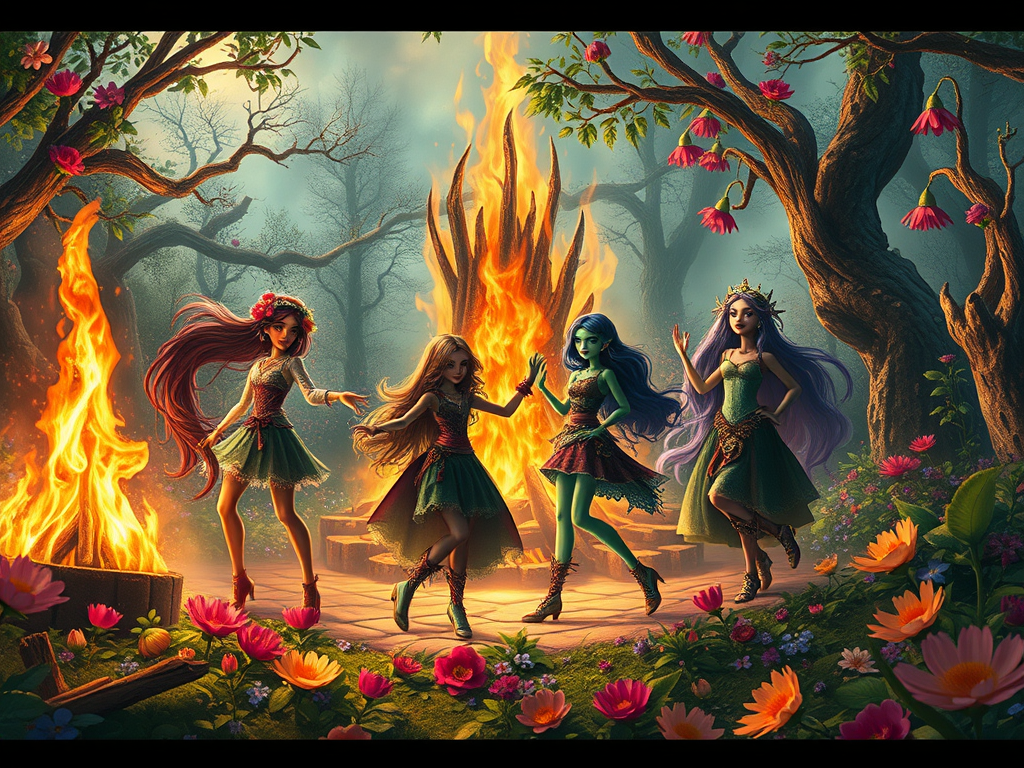
Hello, Fellow Lorekeepers! Imagine a time when flowers whispered secrets, bonfires crackled with magic, and humans danced in circles so wild even a werewolf would be jealous. That, my frightfully fabulous friends, is the spirit of May Day — one of the oldest, most enchanted festivals in the world.
Where it all began : A Dance Between the Worlds
Long before humans built castles or coffee shops, the Celtic peoples celebrated Beltane (“bright fire” in Old Irish) around May 1st. According to the National Museum of Ireland and research by Dr. Ronald Hutton (2001, The Stations of the Sun), Beltane marked the beginning of the light half of the year — when cattle were driven to lush summer pastures, and the veils between worlds fluttered open just a tiny crack. It was a time to protect the land and beasts with fire rituals and offerings to capricious spirits.
Meanwhile, across Medieval Europe, the more “human-world” version, May Day, bloomed. The Romans had their Floralia, a festival for Flora, goddess of flowers. Later, Germanic and British folks twisted these traditions into Maypole dances, flower crowns, and merry mischief — celebrating life, fertility, and the riot of colors springing from the earth.
Meaning: More Than Just Fun and Flowers
For Beltane, it was serious supernatural business. According to the Ulster Museum‘s official exhibits, people leapt over sacred fires to heal ailments and ensure protection for the coming year. Cattle, their most precious resource, were driven between twin fires for blessing and purification.
May Day, though less ghostly, still carried whispers of fertility magic. Twining ribbons around the Maypole mirrored the weaving of life’s forces, and selecting a May Queen echoed ancient goddess worship .
Current Celebrations: Ancient Echoes Today
Today, Beltane has sparked back to life! Edinburgh’s Beltane Fire Festival is one dazzling example, blending old rites with modern performance art. Participants dress as Green Men, May Queens, and spirits, dancing through the night in a vibrant, fiery parade.
May Day traditions survive too — in English villages you’ll still find Maypole dances, Morris dancers with jingling bells, and crowning of local May Queens. Even Labor Day parades around May 1st echo the festival’s theme of renewal and hope, although now tied to workers’ rights rather than spring spirits.
Symbols: Fire, Flowers, and Fantastical Creatures
- Fire: Beltane’s soul. Flames were not just for warmth but purification and connection to the divine .
- Flowers and Trees: Hawthorn and rowan trees were Beltane favorites, believed to house fairies. May Day celebrations wove these plants into garlands and homes to invite blessings.
- Creatures: The Green Man — a leafy-faced guardian of nature — roams both festivals. Some believe May Day’s May Queen and Beltane’s nature spirits are echoes of pre-Christian goddesses and gods.
Little-Known Mysteries: Did You Know…?
🧚♂️ – In ancient Beltane, cakes made from oatmeal and butter were offered to the fairies to ensure good fortune.
🔥 – Some scholars argue that Beltane fires weren’t just symbolic — they may have served as real decontamination tools to prevent livestock disease.
🌸 – In medieval England, it was common to “go a-Maying” — disappearing into the woods to… um, let’s say, “celebrate fertility” in a very hands-on way.
Connection Between Beltane and May Day: Cousins of Renewal
At their roots, both festivals honor the return of life, light, and community after a long, harsh winter. Beltane leans toward mystical protection and spiritual renewal, while May Day frolics more in earthly joy and the tangible beauty of nature — but the energy? It’s the same wild, giddy breath of springtime awakening!
🎀 What about you, darling monster?
Would you leap over a fire to bless your year? Or weave your own enchanted Maypole to summon spring spirits? Share your thoughts — and maybe your dream May Queen or Beltane spirit outfit — down below! Let’s keep these ancient sparks flying! 🌸🔥

Share your knowledge