Gather around, fellow Lorekeepers, for a midsummer tale sparkling with sun‑drunk magic and ancient mysteries—because we love a good bonfire story! Tonight, we dive into Litha, the Pagan celebration of the Summer Solstice, where daylight reaches its fiercest roar and the veil between the mundane and mystical grows thin.
☀️ What is Litha?
Celebrated around June 21st in the Northern Hemisphere, Litha marks the longest day of the year, when the sun reigns supreme before slowly yielding to autumn’s return. Known as one of the eight sabbats on the Pagan “Wheel of the Year,” it’s a challenger to Yule, Ostara, Beltane, and the others in seasonal status.
The name “Litha” harks from Old English, possibly meaning “gentle,” and once referred to the hotter half of June into July.
🔥 Ancient Rituals & Bonfire Legends
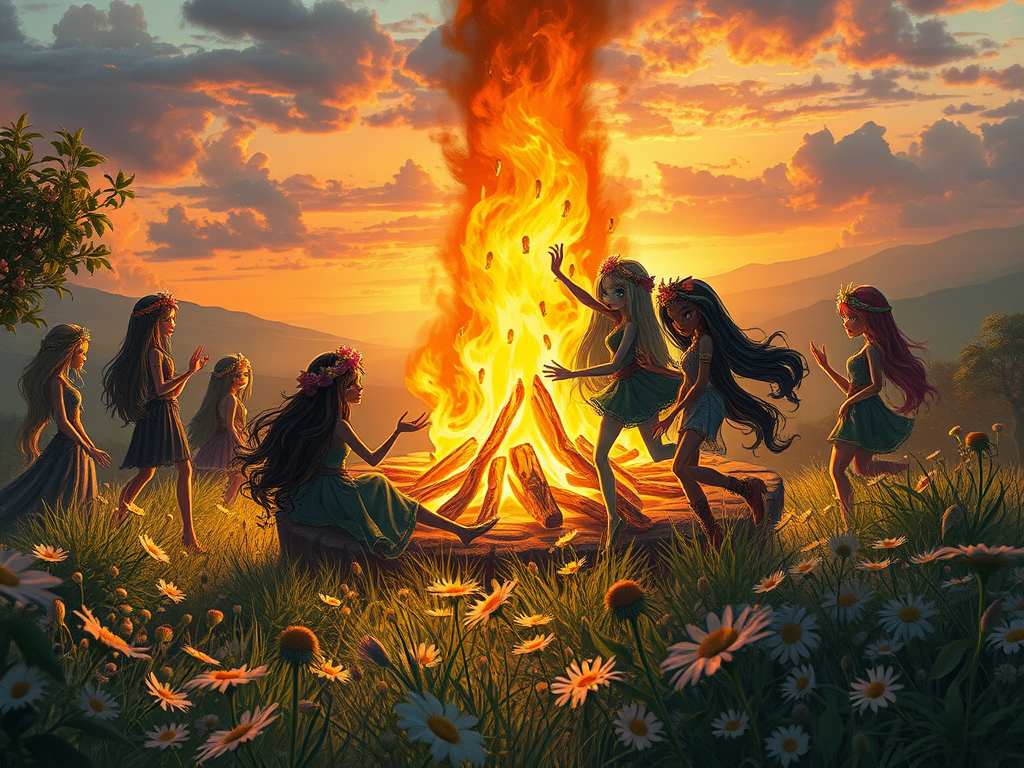
Picture this: hilltop bonfires ablaze, wild daisies in your hair, and woodland spirits swirling—just like the Celts and other ancient European folk who lit fires at solstice for luck, protection, and fertility. Some would vault through flames, betting on good fortune and strength; others rolled burning wheels down a hill into water, promising bountiful harvests.
The British Museum points out that megalithic structures like Stonehenge align with the solstice sunrise—not because Celts threw parties there, but because astronomers and priests of more ancient times intentionally oriented these stones to track the sun’s height.
🧙♂️ Oak King vs. Holly King: The Seasonal Duel
Enter the charming duel of the Oak King and the Holly King—a seasonal dance of light and shadow. From winter’s Yule to Litha, the Oak King rules and daylight grows; at Litha’s peak, the Holly King triumphs, and the night slowly regains power toward winter solstice.
Other symbols of Litha are:
Sunflowers 🌻 – Track the sun’s path and symbolize solar energy and joy.
Lavender, St. John’s Wort, Chamomile – Herbs associated with protection, healing, and the sun.
Roses 🌹 – Represent love, beauty, and the bloom of summer.
Sun ☀️ – Central to Litha, representing light, power, and growth.
Fire 🔥 – Bonfires are traditional; fire symbolizes purification, energy, and transformation.
Bees 🐝 – Associated with industriousness, fertility, and community.
Butterflies 🦋 – Transformation, beauty, and the fleeting nature of life.
Deer, Horse, Eagle – Solar animals, representing strength and nobility.
Wheels or Solar Discs (☀️, circles with rays) – Represent the sun and the Wheel of the Year.
Green Man 🧝 – Spirit of the forest and fertility, linked to nature’s vitality.
Cauldron or Chalice – Feminine symbol of fertility, abundance, and the Earth’s womb.
🧚♀️ Folk Beliefs & Mystical Superstitions
At Litha, magic feels potent: herbs gathered at dawn—like St. John’s Wort—are believed to ward off evil and bring healing. Dew collected at sunrise is thought to boost fertility and even physical beauty.
Folk rituals include weaving flower crowns, floating garlands on water, bathing in lakes or dew, and searching at midnight for the mythical fern’s flower—an enchanted bloom believed to appear only then and grant magic or luck.
🔍 Little‑Known & Scholarly Surprises
- Minoan Astronomy: As early as 3000 BCE, the Minoans at Knossos aligned their palaces to wrangle sunrises and celestial cycles—ancient precursors to Litha’s solar homage.
- Solar Deity Links: Litha rituals honor solar gods across Europe—from Apollo and Ra to Celtic gods like Áine, goddess of the sun and sovereignty, celebrated at this peak day.
- Veil of Protection & Danger: Pagan lore warns that Litha is also when evil spirits roam more freely—hence herb garlands, plight-cleansing fires, and amulets are used to fend off malicious forces.
- Astro‑archeo Echoes: Studies of sites like Levinsadovka and Knossos show early worship of sun and moon cycles—rituals echoing Litha’s solar focus thousands of years ago.
💖 Mystical Practices Now and Then
Litha’s bonfire traditions and rituals later intertwined with St. John’s Eve (June 24) celebrations—especially in Bulgaria (Enyovden), Lithuania (Joninės/Rasos), and Scandinavia—highlighting the blend of pagan roots and Christian overlays.
In Bulgaria, for example, people dance barefoot over embers on Enyovden, believing it’s the first day of summer and a time for healing herbs and sun-blessed luck.
Modern Litha celebrations sparkle with bonfires, outdoor altars, flower crowns, sun salutations, herb-gathering, and quiet meditations on life’s cycles. It’s a time to reflect on light, harness inner power, and set inspired intentions under the sun’s peak glare.
🗣️ Chime In!
What’s your toxic obsession with the sun? Have you tried a dew‑gathering ritual or chased that fern’s flower? Maybe you’ve felt energy shift at bonfire gatherings? Your tales matter—drop your magic moments below and share this story to spark some midsummer mischief!

Share your knowledge